Showing posts with label Costa Rica history. Show all posts

Saturday, July 27, 2013

The Magical Santa Cruz Cheese Festival Of Turrialba

Costa Rica's Largest Cheese...Ever.

Cheese, cheese and more cheese.  The Santa Cruz Feria Del Queso (Santa Cruz Cheese Festival) is perhaps Costa Rica's greatest undiscovered culinary event for any tourist who does not mind severe constipation.  It is a month of dairy delight culminating in the final Sunday unveiling of Costa Rica's largest cheese.  Ever.  It will probably remain undiscovered by most tourists because, even with an automobile, getting to this pretty village in the scenic mountains is a real bitch.  The logistics of traveling in Costa Rica  -a country which has only recently discovered street signs- figured importantly into this trip.

The festival, like all diary products, has its origin in the introduction of foreign cultures.

Costa Rica frequently gets called, "The Switzerland Of Central America," a title which it attributes to its relative stability, prosperity and neutrality as a country in a region of the world that is often known for poverty, drug cartels, military coups and kidnappings.  This safety is debatable, but Costa Rica does resemble Switzerland in a more concrete aspect.  Its mountainous interior resembles the green, verdant rolling topography that we typically associate with that little, neutral, secret-bank-account European country.

These udders are going places
The geographical resemblance is most obvious in the providence of Turrialba.  The region sits at a high elevation, which causes a year-round cool, rainy climate that contrasts with Costa Rica's reputation for sunny beaches.  In the 1850s this climate attracted Spanish immigrants from the La Mancha region (yeah, the Don Quixote place), where they have a long history of dairy production.  The immigrants domesticated some cows, developed farms and quickly built a reputation for the best dairy products in Costa Rica.

While taking the bus on winding Highway 230, the orderly checkerboard farm plots, green rolling hills, tall haystacks and grazing cows made me recall previous summer trips through Switzerland and southern Germany.  My Argentinian friend and I had looked for a big event to finish her Costa Rican vacation, and the "Santa Cruz Feria Del Queso" came up that weekend.  Neither of us were lactose intolerant, so we booked a night at the Casa De Lis Hostel in Turrialba and planned out our travel route with a little help from my roommate, who is from Turrialba.

1. From San Jose take a bus to Cartago.  There are a few options, but Lumaca is the easiest choice. What's most important is that you arrive before 10:00am.

2. Gemon operates bus lines from Cartago to Santa Cruz de Turrilba.  The first one leaves at 10am.  There is another bus that departs at noon.  Leave any later than that and you will miss most of the festival.

3. Most important: indicate to the bus driver that you want to stop at "Santa Cruz de Turrialba."  If you don't speak Spanish, just shout "Santa Cruz, Feria Del Queso!" and make loud "MOOO!" cow sounds.  The driver will drop you off at the highway entrance that is about a quarter mile walk from the fair grounds.  It will be muddy.

Santa Cruz Cheese Festival Fairgrounds

When we stepped off the bus, we congratulated ourselves on bringing jackets and umbrellas.  The mist that we saw coating the green mountains gave the scenery a dreamy quality from inside the bus.  Outside the bus, it simply felt cold and wet.  Fortunately, the majority of the Cheese Festival is held under a giant shed and large tents.  They know their climate, and the temperature heats up quickly once the band starts playing.

Turrialba Spanish
The Cheese Festival fairgrounds are essentially divided into two parts: the stands and the restaurants.  The free-standing tents are where the farmers and vendors sell packaged dairy products and various traditional knick-knacks.  The permanent, tin-roofed shed covers the temporary kitchens where the villagers cook up fresh meals.  Underneath the happy buzz of people eating, drinking and talking there's a constant background sound of mooing from the dozens of cows being housed in a large shed just down the hill.

Before visiting the Cheese Festival, my knowledge of dairy products was pretty much restricted to milk and cheese.  The farmers of Santa Cruz blew that door wide open.  I had learned a lot of Costa Rican Spanish and my Argentinian friend could easily read the menus, but the local Turrialban expressions used for the dishes gave us no clue of what we would eat.  Rosquillos?  Papin de Leche?  Gallos de Ternero?  Leche Volcanica...

Volcanic Milk?? Sounds painful.

The easiest thing to do was to try everything.

Tortillas de Queso (Cheese Tortillas) looked like the most straightforward thing to start with.  It was simply that: a thick piece of bread made with flour and white cheese mixed together.  It tastes fine by itself, and even better with a spoonful of mild salsa or light sour cream on top.  The best way to wash this down is with a glass of Volcanic Milk.  The "volcanic" part comes from the shot of rum and coffee they add to the milk.  Think of it as a Tropical White Russian (or El Lebowski Grande.)

Cheese Tortillas with Volcanic Milk

Chicarrones De Queso: addictive
Desserts made up the majority of our meal.  Papin de Leche (Milk Daddy?) is a type of flan, but fresher thanks to our bovine neighbors.  Chicarrones de Queso (Cheese Chicarrones) worried me at first.  I imagined Mexican chicarrones, which are basically pork rinds.  What I got was similar to crack cocaine, but way more addictive.  Take white Turrialba cheese and then fry it in caramel.  As a red-blooded American, I believe anything is better fried.  I ordered two packages of it and finished the first one in 10 minutes.


After eating we went to the vendors' tents to see what we could take home.  Almost all the products were fresh from the farm; the cheeses squeaked and the sour creams practically dripped from their bags.  I purchased a bag of sour cream, some sweet buns, a liter of rum-and-milk cocktail called rompope, and a block of smooth, white Turrialba cheese dotted with red and green peppers.  My Argentinian friend had a little more difficulty.  Since she was boarding a plane soon, she needed something that could pass through customs easily.  Eventually we found a vendor who sold their cheese in sealed, air-locked plastic bags.

I got constipated just looking at it.

In the history of culinary events it was epic, but as usual the specter of Costa Rica's confusing public transportation reared its ugly head.  Despite a clearly-posted online schedule, and confirmation from the locals, the bus we planned to take back to Turrialba failed to appear at 5:30pm.  This was not unusual.  At 6pm the bus failed to appear again, but we were still laughing about Latinos and their chronic lateness.  When the bus failed to appear 15 minutes later, and continued to do so for the next hour, we became concerned.

We were not simply naive tourists unaware of local practices.  Ten other Costa Ricans were stranded with us on the side of the road, all complaining about the atrocious state of their country's public transportation.

It ended well.  After nearly two hours of hoping and wondering and waiting, a bus --which was not the one we wanted-- arrived to take us to a nearby small town.  We were still nearly 10 miles from Turrialba and it was nightfall.  Luckily, some of the other stranded Costa Ricans had friends in the small town who kindly gave us a ride to our hostel in Turrialba.  We dined and drank with the other hostel guests and soon passed out, completely exhausted.

The followed morning we made a dairy breakfast out of the sweet buns, sour cream, cheese and alcoholic rompope.  I was not able to shit for the next three days.  This is a small price to pay for visiting the magical Santa Cruz Cheese Festival of Costa Rica.

Sweet Buns, Sour Cream and Rompope


Friday, June 21, 2013

Guayabo National Monument: Pretty Much The Only Ancient Ruin In Costa Rica


Costa Rica has plenty of outdoor activities to keep your average wannabe ecotourist happy forever.  Ziplining, trekking, climbing volcanoes and feeding monkeys are all the standard package trip to this tropical country.  But after living there for some time, I noticed something was missing.  I've drank on the San Andreas Mayan Pyramids in El Salvador, sunburned myself on the massive Teotihuacan Pyramid in Mexico and offended God in historical churches in Nicaragua.  And no hostel chat in Latin America is complete without some new-age douchebag mentioning the stunning Aztec city of Macchu Picchu in Peru...and how he tripped balls on ayahuasca there.

Where are all the ancient ruins in Costa Rica?

Ancient Guayabo Zipline Facility
I fretted over this for awhile, then got distracted for the next few months by my 50+ hour work week.  I forgot all about it until Barbara, a coworker of mine, announced she was leaving Costa Rica in 2 weeks and invited me to see Guayabo National Monument:

"What's a Guayabo? A fruit?"

"It's just some old stones in Turrialba.  I don't really know how great it's gonna be.  We can still go out in Turrialba that night or find time for kayaking on the river."

"Sounds good.  My roommate's from Turrialba.  She could show us around."

Some Rocks. It Gets Better.
Let's be brutally honest.  If you're a backpacker who's on a Latin America tour and you've already seen Macchu Picchu, Teotihuacan or Copan, then seeing Guayabo is as breathtaking as watching "The Hangover 3" after having just seen the first two.  Really, that's the best they could do?

Regardless, I never say no to a roadtrip.  Especially with Barbara, who is from Slovakia.  This is a country which most people can't locate on a map, but by wild coincidence I happened to live there for 2 years.  As with all Slovak women, she is tall and stunningly beautiful.  Although she was definitely in Costa Rica for 'exotic' Latin men, we still hung out since I knew how to curse in Slovak and "drink like a Slovak."  I looked up 'Guayabo National Monument' and discovered it really is the only ancient archaeological site in Costa Rica.  Well, I finally found some history.

One of Barbara's friends (also Slovak) came with us.  We caught a late bus on Saturday from San Jose to Turrialba.  It was a long 2 hours in drizzling rain through the rolling Cartagao mountains.  The Slovak girls rambled on in Slovak while drinking rum and ginger out of plastic bottles.  I eventually dozed off when I realized I had completely forgotten what little Slovak I had learned...

By good fortune, I had contacted a Couchsurfer, Tete, from Turrialba who agreed to help us with our trip to Guayabo National Monument.  She wasn't able to give us a place to stay that night, but she offered to drive us and be our guide at Guayabo.  When we arrived she took us in her car to various lodgings where we could stay.  We eventually settled on the Intercontinental; for a nice room with 3 beds in the city center it came out to less than 15 dollars per person.

Katka declared she was tired, leaving Barbara and I to experience the nightlife of small-town Turrialba.  My roommate was in town for the weekend, so I contacted her.  She was at a wedding party in Club Nazca, a short 15 minute walk from the Intercontinental.  This didn't seem like a problem until we started asking people about the location:

"Oh no no. That walk is too dangerous at night.  Take a taxi there."

Some Of The Local Men
Turrialba is town of less than 30,000 people.  The thought of this small town being 'dangerous' seemed absurd to me, an American, and Barbara, a European.  Unfortunately this is the reality of living in Latin America; even the smallest villages are still dangerous, especially for obviously 'gringo' tourists who draw attention.  Barbara, being a tall, white exotic European woman, was already getting annoyed with all the catcalls she was getting from the local men on the streets:

"Hey, you speaky English?" "I loves you!!!" "You are sooo beautiful."

It was a short night.

Tete picked us around 9am the next morning and we drove the half hour up a rocky, rutted trail to the park entrance.  Since I was a passenger, I wasn't observing our route, and Costa Rica directions are always tricky.   Based on the maps I've seen, both Route 415 and Route 230 from Turrialba will take you there.  There is a bus that leaves from Turrialba twice daily that goes to the entrance; take the morning one.  Expect rain, expect rain and...expect rain.  Also foreigners, expect to pay more than nationals.  Another reality of the 3rd world.  Tete and her Costa Rica friend paid 600c ($1.20) while us foreigners paid 3000c ($6.00.)

A price increase of 5 times is justified...because we know all English teachers are very wealthy.

No one can really explain the existence of Guayabo National Park.  This is perhaps because, out of the 217 hectares that constitute the park, just 20 hectares are designated as an archaeological site, and only a small portion of that has been excavated.  Delayed development of the park has also contributed to a lack of information.

The archaeological site was first discovered by accident in the mid-1800s by rich coffee barons looking for plots of land to grow their cash crop for export, and to continue feeding their caffeine addiction.  At this time, the coffee industry was the popular kid in Costa Rica and ran around poking all the other little industries with sticks until they cried.  When news of the archaeological site discovery broke, a few nerdy archaeologists got really excited and asked to excavate it.  The coffee barons poked them with sticks until they shut up: "Who cares about this land?  How the hell can you grow profitable coffee beans with all these stones in the ground?"

Remember, this was before the ecotourism industry existed.

Guayabo was pretty much ignored for the next 100 years.  Finally in 1968 one of the less nerdy archaeologists, Carlos Aguilar AKA "Carlos The Eagle," convinced the Costa Rican government to set up a permanent excavation program on the site:

"Trust me, please.  Archaeology is really cool.  Also the gringos will pay us big money to look at these old rocks.  Seriously."

In 1973, the government designated Guayabo as a national monument.  "The Eagle" and his fellow archaeologists finally got to play in the dirt without worrying about rich, over-caffeinated coffee barons poking them with sticks.  Here's what they discovered.  (Or rather what I translated from Spanish Wikipedia.)


Guayabo was a pre-Columbian society that was occupied from sometime between 1000 B.C. to 1400 A.D.  Much like today, it was governed by a quasi political-religious head known as a cacique, which is also the name for Costa Rica's national firewater.  There are many theories on why the society was abandoned including: disease, war and internal conflict.  Surprisingly enough, European Spain's religious, ass-kicking, kill-all-the-brown-people campaign had nothing to do with it, since the site was abandoned at least 100 years before invasion.  The site mainly consists of a series of connected aqueducts, aqueduct locks, large basins where the water was collected and several large streets which aided with water drainage.  In other words, you are paying 6 dollars to look at an ancient sewer system; septic tanks included.

A Cute Crocodile Petroglyph
 Guayabo has much more besides extensive historical plumbing.  There are several monoliths, tombs and stone petroglyphs carved with jaguars, birds and two-tailed crocodiles.  The Costa Rica Board of Tourism wanted to install additional petroglyphs in the park carved with cute, wide-eyed green tree frogs and smiling tree sloths, but the Archaeological Society told them, no, there's already enough fucking cute tree frogs and tree sloths in your current tourism campaign, carapiche mae.

All of these structures are centered around a group of large stone mounds.  They have weathered the years quite well.  I had hoped there was a more dramatic English translation of monticulo, such as "Fucking Stunning Pyramid" or "Giant Damn Epic Mausoleum," but no, they are just mounds.  The other translations (hump and hummock) are even worse.

Guayabo National Monument is certainly not the largest, most breathtaking ancient ruin in Latin America.  Not even in Central America.  It doesn't matter.  After seeing all of the mounds, aqueducts and stones, Barbara, Tete, I and the rest of our friends climbed to the top of the park's scenic overlook.  When we looked down at the site and realized we could see clear to Columbia, we knew we were viewing the most impressive sewer system ever.  Wow.


Wednesday, June 19, 2013

Costa Rica Before Ecotourism: Why Is Everyone So White Here?

This was supposed to be about Guayabo National Monument, but it turned into a highly subjective, poorly researched lesson on Costa Rican history.

A Primitive Diquis Lawn Ornament
Where are all the Mayan and Aztec ruins in Costa Rica?  Other than the occasional giant, stone Diquis sphere being used as an oversized lawn ornament, the indigenous presence is decidedly absent here.  Somewhere beyond all the zip-lining, scuba-diving, turtle-watching and other hyphenated, modern ecotourism (hyphenated?) activities, there has to be some ancient history in this gringo-manufactured paradise.

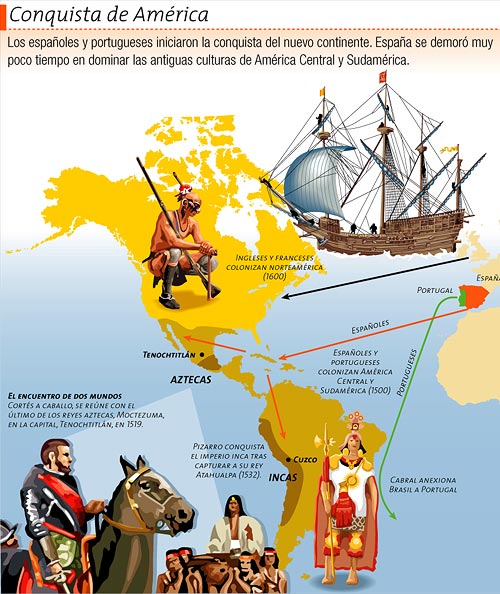
Modern Costa Rica has everything today because of what it didn't have before.  Tropical rainforests, pristine beaches, smoldering volcanoes, untouched wildlife: these exist in every Latin American country.  What set Costa Rica apart from the beginning was a lack of gold, silver and other precious minerals.  These formed the economic foundation of the giant Aztec, Maya and Olmec indigenous civilizations that developed elsewhere in the region.  Those guys stayed away from the poor, gold-deprived lands of present-day Costa Rica.

How did this affect modern Costa Rica?  As rapper Notorious B.I.G. once famously stated: "More money, More problems."  These precious minerals also attracted Spanish European colonists, AKA conquistadors.  They weren't very happy to see "uncivilized" heathen, brown people possessing precious gold and silver which should -according to their Catholic God- rightfully be theirs.

The Spaniards went on a divine campaign to kick some serious indigenous ass in order to get their hands on the Bling-Bling.  Hundreds of years of Spanish ass-kicking (along with the help of imported diseases) eventually resulted in a very hierarchical, military colonial system throughout most of Latin America.  Spanish Europeans were on top, mixed mestizos were in the middle and (as always) the brown people stayed on the bottom.  Not surprisingly, there was some resentment.

Costa Rica came out pretty lucky...historically speaking.

Costa Rica Had No Bling-Bling
Of course, pre-Costa Rica had some brown people, but what few remained were almost completely destroyed by Spanish military and diseases.  There weren't indigenous people left to form hierarchies.  Perhaps you've noticed Costa Ricans are pretty "white?"  This lack of gold, plus the challenging geography of the Central and Talamanca Mountain ranges, resulted in Spain giving the area low-priority status on its Bling-Bling treasure hunt.

A few of the more laidback, peaceful Spaniards found they enjoyed Costa Rica's fertile Central Valley and its quiet beaches.  They decided to take a little siesta while their gold-hungry, bloodthirsty kin continued indigenous ass-kicking annihilation throughout Latin America.  Fighting?  Military Campaigns?  Mae, that's so much work... These relaxed dudes set up small, family farms and pretty much stayed out of each others' business for the next couple hundred years.

Pura Vida.  This laidback, friendly farmer's attitude persists to this day in Costa Rica.  It explains why the country was quite happy to abolish its military in 1948 and continue chilling out on the beach.  Meanwhile other Latin American countries' histories of hierarchical, military colonial rule resulted in long festering resentment and a general, small child's "It's-Not-Fair-Wah-Wah" crybaby attitude.

Ironically, people attempted to solve this problem by continuing their Spanish oppressor's tradition of colonial-style, ass-kicking by means of a series of military juntas and coup d'etats that changed with the frequency of a woman's mood in the worst stages of PMS.  Costa Rica became attractive to American and European tourists since they didn't have to worry about their tranquil, all-inclusive beach resort being suddenly turned into a military base for another egotistical, black sunglasses-wearing dictator waving around a copy of "The Communist Manifesto."

I am simplifying this a little.  Research names like Braulio Carrillo and Jose Figueres Ferrer for more thorough information.

Anyway, Costa Rica's peaceful history has made it today's standard for ecotourism.  Ziplines, trekking, turtle-watching and other environmental-friendly, artificially created activities form the backbone of the tourist industry.  But its lack of minerals and the indigenous people that originally depended on it means it is one of the few Latin American countries that lack spectacular ancient ruins such as Teotihuacan, Copan and Macchu Picchu.

There is one ancient ruin in Costa Rica: Guayabo National Monument.  I was going to write about it here, but I have already gotten way too far off track.  In true Costa Rica "Pura Vida," fashion: it can wait until tomorrow.

Guayabo National Monument